For your information
You are being redirected to one of our divisional subsites which contains more detailed information on the required division. To navigate back to the main Invicta Group site, please click the link found in the footer at the bottom of the page.








London substation fire highlights risk to parallel buildings
14th July 2025
Quick Quote
Contact Fraser Shearer Sarun Vysakham Ben Tan Anand Raghavan Anand Raghavan Our USA Office
To get a quotation or arrange a free site survey - Call Fraser Shearer Sarun Vysakham Ben Tan Anand Raghavan Anand Raghavan Our USA Office on
-
 UK
UK
-
 UAE
UAE
-
 Malaysia
-
 India
India
-
 Qatar
Qatar
-
 USA
USA
Current location:
Quick Quote
Contact Fraser Shearer Sarun Vysakham Ben Tan Anand Raghavan Anand Raghavan Our USA Office
-
UK
-
UAE
-
Malaysia
-
India
-
Qatar
-
USA
Current location:
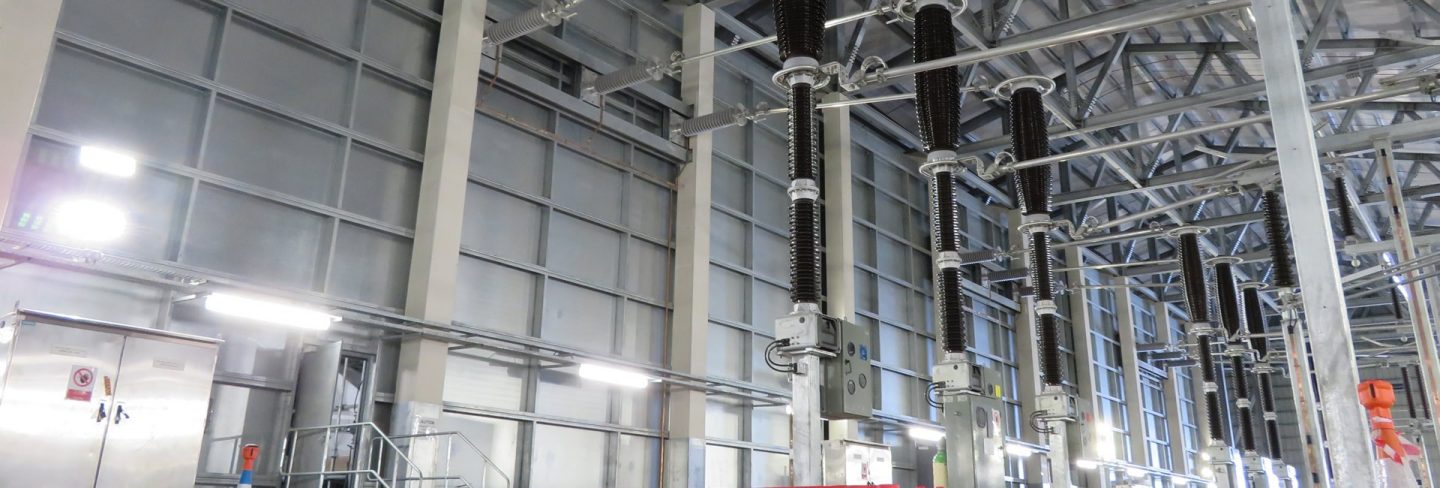
A substation fire in Maida Vale in north-west London was recently extinguished after just over five hours—but not before spreading to a neighbouring block of flats, causing residents to be evacuated. Occurring just weeks after a similar fire at North Hyde substation caused a loss of power to Heathrow airport, the incident is raising questions about the safety of power infrastructure, both in London and further afield.
While two incidents don’t make a trend, they are worth investigating. A number of factors may be coming together to raise the potential for transformer fires, posing a risk to substations and transformers elsewhere. The question is at what point the risk of fire outweighs the cost of fire protection, and when this balance is due to shift.
Substation issues
Unlike the recent Heathrow substation fire, the substation involved here continued to operate through the fire. This is not to underplay the severity of the fire, however, which caused a huge plume of black smoke which could be seen for miles across the city, and led to an air quality advisor being deployed to the site to monitor air safety, and for local residents to be advised to keep their windows closed.
Early indications suggest that a fault in the transformer caused the fire. While they do not happen often, fires and blasts are a latent possibility for electrical transformers and the substations that contain them. Between 2 and 4% of transformers will be involved in a fire incident at some point during their lifetimes, and the likelihood of fires rises by between 0.06% and 0.1% per year of service. With many transformers being in service for several decades, a fire is far from a remote prospect, and something that should be both accounted for and accommodated for.
This has led to a number of notable fires in recent history. As well as the two quoted above, major transformer fires have occurred in North Yorkshire, North Lincolnshire, Anglesey and Berkshire in recent years, causing local power disruption. A substation fire in London back in 2008 left thousands of homes across the capital without power, while a substation explosion that same year in Essex killed one person, and left a hospital without electricity.
Protections and pitfalls
The rarity of these incidents reflects the hard work and good maintenance practices of companies such as UKPN, the National Grid, Scottish Power, SSE and other organisations involved in maintaining UK power infrastructure. But this is not a reason for complacency, particularly in the face of evolving threats. As well as the potential for terrorist attacks on power infrastructure, there’s also the factor of climate change. Rising temperatures—as seen with a particularly hot April—pose an increased risk of fires and explosions at substations, and the potential for faster degradation of substation equipment.
As this recent fire demonstrates, substations aren’t always in remote areas, either. The close confines of many inner-city areas and the large developments therein can mean substations are close to buildings, or even integrated with them, with basement substations in many large buildings such as skyscrapers. These naturally come with more stringent requirements for fire safety, but are not immune from problems, such as those demonstrated in a shopping mall fire in Malaysia in 2023. The intensity and duration of such a fire can still lead it to threaten the integrity of a building if the fire is not tackled quickly and effectively.
The potential impact of budget cuts also has to be considered. Public infrastructure has been under severe cost pressures for some years now, and these look set to continue. Given the low (but increasing) risk of substation fires, the temptation may be to push equipment further and eke out more years of service, managing the risks rather than replacing the equipment wholesale. All of this is also happening at a time of rapidly growing power consumption, both domestically and from facilities such as data centres, which are powering the AI tools being integrated into many aspects of daily life.
Combine this with a changing climate, and such a decision could be a fateful one. Limiting funding for equipment replacement and repair could be a politically expedient choice, which is easy to justify based on historic data, and the relative safety of transformers to this point. But this decision could find itself divorced from the realities of modern substation fire and blast protection. The result might be an increase in such fires and blasts, threatening power infrastructure that has been proved to be fragile by the Heathrow substation fire, and potentially putting lives and property at risk.
Improving substation safety
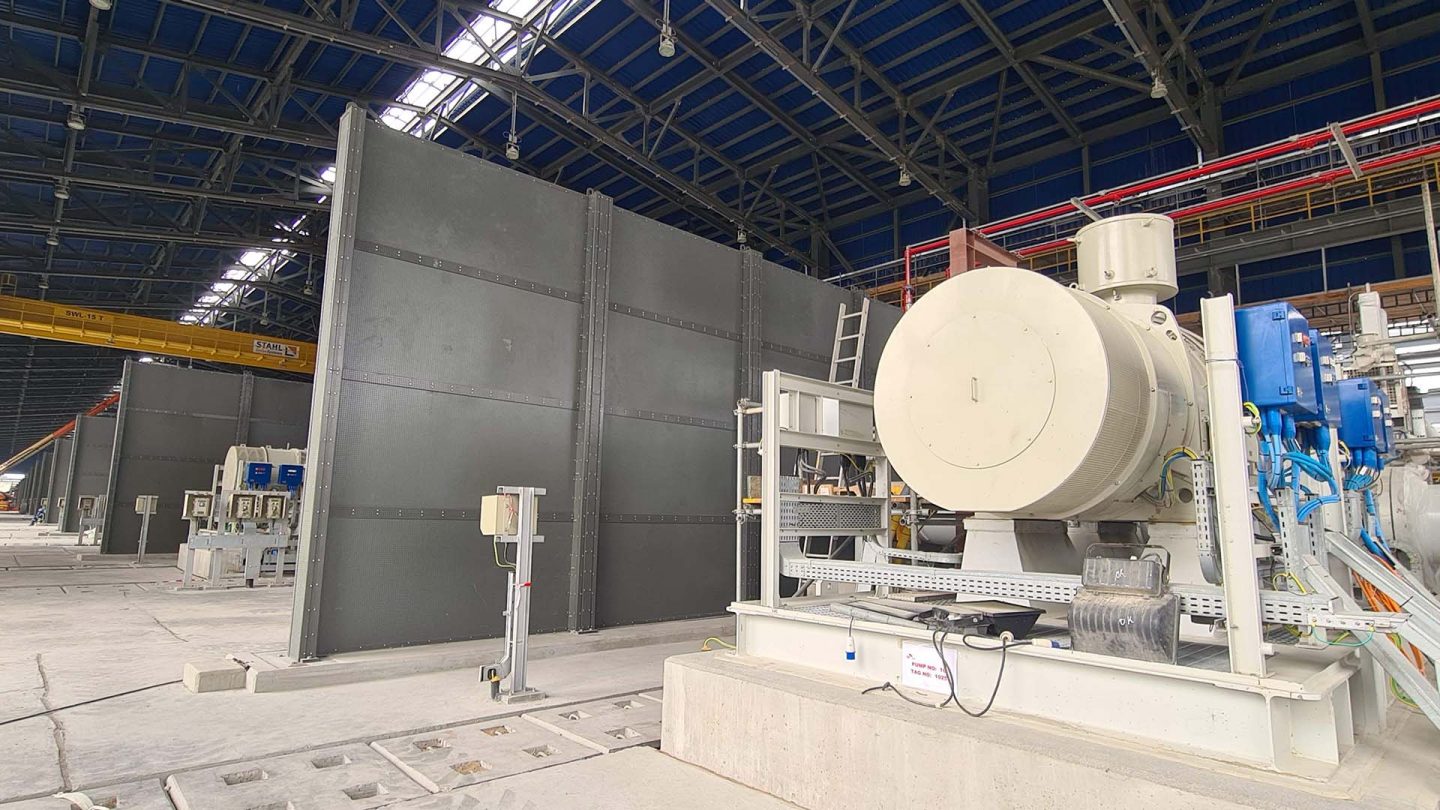
So what can be done? Thankfully, there is one option that doesn’t require wholesale replacement of ageing transformers: fire barriers. Fire barriers can be retrofitted and placed between existing transformers and other, neighbouring transformers to mitigate the damage caused by a fire or blast. This doesn’t stop the equipment from malfunctioning, but it can isolate the problem, preventing a fire from spreading between transformers, or a blast from damaging nearby equipment. This can prevent a scenario such as was seen in the Heathrow fire, where the spreading fire led to the failure of the substation—or a situation like this one, where the fire spreads to a nearby building.
If there is a reluctance to install transformer fire barriers, it’s only because of the cost of the installation system and the downtime it that causes may be incurred during installation. But this has to be weighed against the increasing risk of fires and blasts posed by the multitude of factors cited above. The extent of downtime is also often overstated: barriers can often be installed without having to shut down the entire substation, and completed rapidly by a small number of trained personnel.
Fire and blast protection doesn’t have to mean using concrete, either. While an effective form of protection, concrete barriers are bulky, heavy, immovable, and take a long time to set and cure. By comparison, Durasteel barriers—made from punched steel sheets chemically mechanically bonded to a cement core—are much thinner and lighter, allowing them to be easily installed and removed when necessary. These can provide equivalent protection in a much smaller form factor, and require far less substation downtime.
–
Substations are in no way inherently unsafe, and measures are already in place to prevent fires. But the nature of constant power delivery and the lack of redundancy in some areas inevitably means that some risk remains, and this could be elevated in the coming years.
This makes it imperative that any lessons that need to be learned from these recent incidents are—or at least, that they provide the impetus to address the potential issues at hand. Failing to better protect substations could not only lead to further power outages, but put lives at risk, both directly and through the spread of fire to adjacent properties.
Accreditations & Affiliations











SpecUp - System Specification Wizard
Answer the 5 short questions below to receive your recommended Durasteel system specifications. Hover over the ? icons for a brief explanation.
Question 1/5
Type of system required?
Question 2/5
Fire rating required?
Question 3/5
Fire integrity-only or integrity and insulation?
Question 4/5
Fire attack risk from one side or both sides of the system?
Question 5/5
Blast rating required in addition to fire rating?
Creating your results page
Thanks for completing the SpecUp, you’ll be redirected to your results shortly.
Click here if you aren't redirected after a few seconds
Share/Like this page